Farizon Makes COP31 Debut, Highlights Full-Lifecycle Carbon Reduction Efforts
November 16,2026
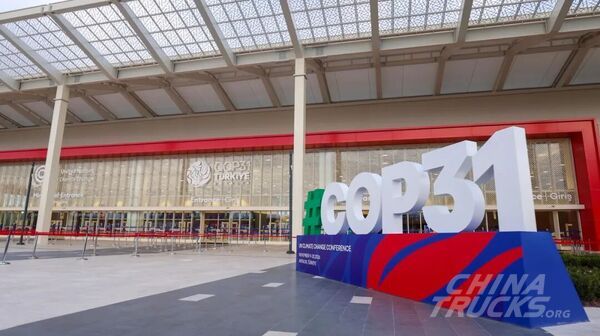
Farizon is the commercial vehicle business unit of Geely Holding Group. Its participation was part of Geely Holding's broader sustainability efforts at COP31. As one of the early Chinese companies to join the United Nations Global Compact, Geely Holding was invited to attend the conference and jointly hosted a China Pavilion side event with the China Association of Automobile Manufacturers (CAAM). At the event, Geely Holding also launched the Electric Vehicle Sustainability Alliance (EVSA), a global initiative to promote sustainable development in the electric vehicle industry.
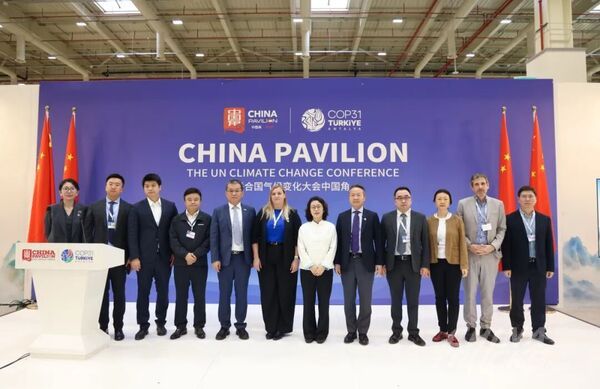
Joining Geely's Global Efforts to Cut Carbon Emissions
On November 13, Geely Holding and CAAM held a side event at the China Pavilion under the theme "Driving Towards a Green Future: Energy Transition in China's Automotive Industry and Global Supply Chain Cooperation."
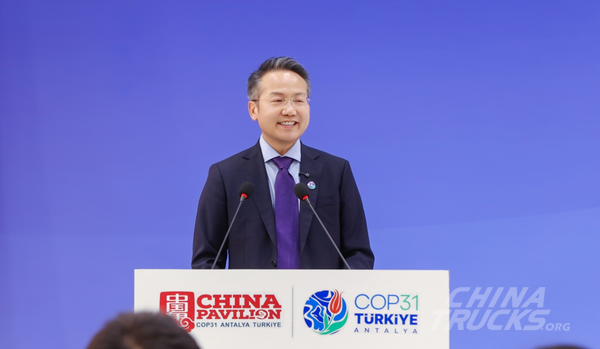
The event brought together representatives from industry associations, international organizations and companies across the global automotive supply chain to discuss the industry's energy transition and sustainable development.
Chen Yimin, Vice President and Chief Compliance Officer of Geely Holding Group, delivered a keynote speech titled "Geely's Approach to the Global Automotive Industry Transition." He also shared the group's latest progress in sustainability.
Geely has built 26 national-level green factories and 13 zero-waste factories. The group aims to achieve carbon neutrality across its entire value chain by 2045 and will continue to implement emission reduction measures towards its 2030 targets.
As the automotive industry moves towards electrification and intelligent technologies, reducing carbon emissions requires action across the entire value chain, including raw material sourcing, supply chain management, manufacturing and business operations.
As Geely Holding's only commercial vehicle business unit, Farizon applies this approach throughout the entire vehicle lifecycle. Its ESG management covers product design, manufacturing, vehicle operation and end-of-life recycling, supporting the brand's ToU zero-carbon sustainability strategy.

Reducing Emissions Across the Commercial Vehicle Lifecycle
At a roundtable discussion during the China Pavilion event, Feng Jun, Chief Legal Officer of Farizon New Energy Commercial Vehicle Group, shared the company's progress in ESG and carbon emission reduction.
At the product development stage, Farizon works to reduce carbon emissions from the beginning of the design process. In 2025, the company carried out 55 emission reduction projects in research and development. As a result, the carbon footprint per ton-kilometer across the vehicle lifecycle decreased by 11.7% compared with the 2021 baseline.
Farizon also worked with upstream suppliers to assess the carbon footprints of more than 100 vehicle components. The company completed carbon footprint models and reports for eight commercial vehicle configurations. The reports received a "Good" rating for data quality, marking the first such achievement in China's commercial vehicle industry.
In manufacturing, Farizon currently operates five national-level green factories and one zero-carbon showroom. The total installed capacity of solar power systems across its production bases exceeds 40 MW, helping reduce carbon emissions by more than 19,000 tonnes annually.
In 2025, the company carried out 77 emission reduction projects, cutting carbon emissions by 35,800 tonnes. Carbon emissions per vehicle from manufacturing also decreased by more than 50% compared with 2021.
Farizon is also working to improve vehicle recycling and resource recovery through its Extended Producer Responsibility (EPR) program. The company has established more than 250 recycling sites and achieved 100% battery traceability. End-of-life vehicles have a recycling rate of 95%, while the overall resource utilization rate reaches 75%.
Green Methanol: Building an Integrated Industry Chain
Building on Geely Holding's more than 20 years of experience in green methanol technology, Farizon is developing an integrated industry chain covering methanol production, transportation, refueling, vehicle applications and carbon capture.
For methanol production, Farizon is focusing on several technologies, including low-carbon methanol, e-methanol, biomass methanol and methanol produced from household waste.
One approach combines hydrogen production through electrolysis with carbon capture. It converts renewable electricity from wind and solar power into liquid methanol, which is easier to store and transport. Each tonne of green methanol produced can utilize 1.375 tonnes of carbon dioxide, allowing captured CO2 to be reused as a resource.
Farizon's methanol-electric commercial vehicles are used in a range of applications, including long-haul logistics, short-distance transportation, urban delivery, construction and public transportation.
With longer driving ranges and convenient refueling, these vehicles offer an alternative to diesel-powered trucks and help address challenges in the transition to new energy heavy-duty vehicles, including vehicle weight, driving range and refueling infrastructure.
Compared with diesel-powered vehicles, Farizon's methanol-electric vehicles reduce particulate matter (PM) emissions by 98%, carbon monoxide (CO) emissions by 88% and nitrogen oxides (NOx) emissions by 82%. They can also reduce overall energy consumption costs by 32% to 52%, offering both environmental and operating cost benefits.
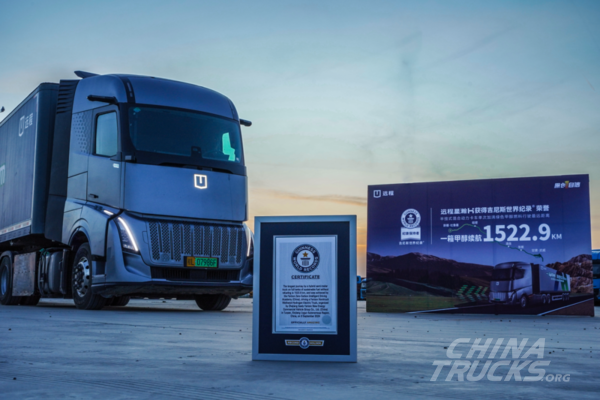
To date, more than 70,000 methanol-electric vehicles have been put into operation, with accumulated mileage exceeding 25 billion kilometers. More than 1,400 methanol refueling stations have been built across China. The number is expected to reach 4,000 before 2030, making methanol refueling more accessible to users.
Working Towards Carbon Neutrality Across the Value Chain
Looking ahead, Farizon will continue to integrate carbon reduction into product development, manufacturing and vehicle recycling, while also strengthening its efforts in environmental protection and social responsibility.
In line with Geely Holding's goal of achieving carbon neutrality across its entire value chain by 2045, Farizon will work with global industry partners to develop green technologies and reduce emissions throughout the supply chain. Through these efforts, the company aims to support global climate action and the sustainable development of the commercial vehicle industry.
Source : www.chinatrucks.org
Editor : Mia
Views : 4934
Tags : FARIZON